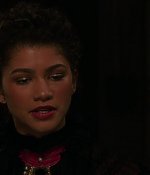
Zendaya and Sam Levinson spoke to IndieWire about how HBO’s drama can connect a generation of teens, even if they’re not watching.
The scene was just seven words: “Leslie and Rue fight in the hallway.”
“So we’re thinking a little yelling, slamming a door, call it a day,” Zendaya recalled while speaking with IndieWire.
But then, driving to set that morning, writer-director Sam Levinson had an idea. Why not try a little improvisation, and see where it goes?
“So I talked to Nika [King], talked to Z,” Levinson said, using shorthand for his already mononymous star, Zendaya. They shot the first take without any improv — just a mother and daughter yelling before the latter slams her bedroom door — “and it was good, it was interesting,” but Levinson wanted to “push it farther.” “However dark she goes, you go darker,” Levinson remembered telling his actors.
The result is what viewers see in the premiere: Rue (Zendaya), a drug-addicted teen, being confronted about her problem and reacting with raw animosity — knocking a framed picture off the wall and using a shard of the broken glass to threaten her own mother.
“It got to a place where it felt so fucking real — where she’s coming at her with the glass — and it was one of those moments where the entire crew […] just walked away from the set for 15 minutes [when it was over],” Levinson said.
“That day took a toll,” Zendaya said.
In a nutshell, that’s what “Euphoria” is striving for: an intense, authentic experience that connects with its audience on a personal level. But despite the extreme reactions to some of its more abrasive scenes, that intensity is designed to help more than provoke. If this scene and the many others like it merely make people angry, they’re not doing their job. “Euphoria” can serve as an introduction to a world some viewers don’t know is out there, as well as a connection for the people who are already living in it so they don’t have to feel alone. Over a first season both gripping and alienating, here’s how “Euphoria” is trying to help teens — even when they’re not watching.
If Not Teens, Who’s “Euphoria” Made For?
“Euphoria” creates a brand new world for anyone who hasn’t lived it, which is an easy path to controversy. For some, scenes like the above can be a lot to take in, and the consistent depictions of teen sex, drug use, and violence only add to the uncomfortable experience — HBO’s weekly episode rollout doubles as a much-need breather between sessions.
But for others, the onscreen drama merely mirrors a life they’re all too familiar with, making for a casual viewing experience or even a cathartic one. They know the high schoolers in “Euphoria” are out there, whether they’re friends, family, or people they know through the internet.
With that split in mind, the question becomes: Who is “Euphoria” made for? It’s made by young people, about a younger generation. Zendaya was 21 when she shot the series, Levinson in his early thirties. Still, no one is claiming the show is aimed at a teen audience — not the creator, star, or HBO president Casey Bloys. But “Euphoria” is still trying to help them, whether they watch it or not.
“I hope it creates a certain dialogue between parents and their kids,” Levinson said. “I don’t think this is a show for people under 17, but…”
“…but if your parent wants to have a conversation about it, that’s good,” Zendaya said.
“Or if you’re going to watch it anyway, and you have a feeling your kid is going to watch it anyway, then it might be good to have a conversation with them,” Levinson said.
“[People say] ‘Oh, it’s so shocking!’ To me, it doesn’t feel that way,” Zendaya said. “Because, yeah, I know someone who had that issue, and my homie went through that, and damn, that’s just like so-and-so. It’s only shocking if it’s maybe not your personal experience. Maybe you had a different path and you never met anyone who went through any of that — but I highly doubt it.”
Continue reading