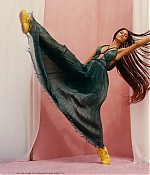
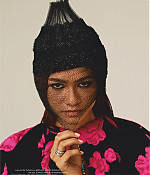
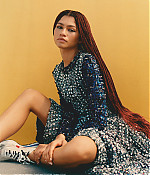
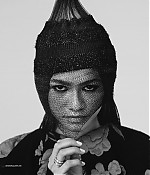
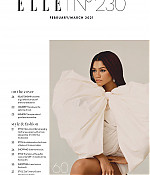
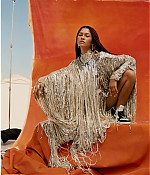
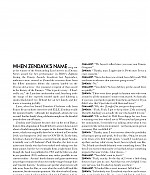
I’ve added magazine scans of Zendaya from the new issue of Elle Canada. Enjoy!

 |
 |
 |
 |
 |
 |
 |
 |
 |
 |


I’ve added a bunch of new film stills of Zendaya from Malcolm and Marie. I am sooooo excited for this film!! I’ve also added HD screencaps of Zendaya from the second bridge episode of Euphoria. Also, Malcolm and Marie is featured in the new issue of Entertainment Weekly. I’ve added scans to that in the gallery thanks to Jen. Check out all the lovelies in the gallery.
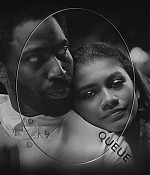
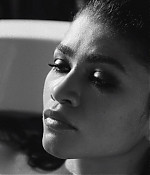
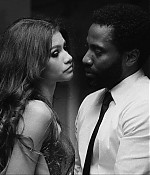



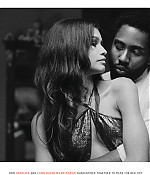

Carey Mulligan (“Promising Young Woman”) and Zendaya (“Malcolm & Marie”) sat down for a virtual chat for Variety’s Actors on Actors, presented by Amazon Studios. For more, click here.
In “Promising Young Woman,” Carey Mulligan’s Cassie has been knocked off track by the rape of her best friend, Nina. In the aftermath, Cassie has devoted herself to a life of revenge — but it’s getting her nowhere. Mulligan and Emerald Fennell, the writer-director of “Promising Young Woman,” clearly formed a close bond, which she discusses with Zendaya — who has a similarly simpatico relationship with Sam Levinson, the writer-director of her forthcoming film, “Malcolm & Marie” (and the creator of HBO’s “Euphoria,” for which she won an Emmy in September).
In “Malcolm & Marie” — shot in June and July in Carmel, Calif., under COVID-19 protocols, one of the first films to do so — Zendaya plays the girlfriend of a stubborn director (John David Washington), who stays up late on the night of his premiere to argue (passionately) in the style of a Tennessee Williams play, about his art. And in a move that Marie would approve of, Zendaya asks Mulligan about her calling out Variety’s tone-deaf review of “Promising Young Woman” and our subsequent apology.
Carey Mulligan: I watched “Malcolm & Marie,” and then I started watching “Euphoria,” and I’m geeking out. You’re just so extraordinarily good in both of them. “Malcolm & Marie” is so brilliant and so beautiful. Such an amazing accomplishment in lockdown. What was that like?
Zendaya: I think the No. 1 thing was the ability to do it safely. It started with conversations with Sam Levinson, obviously, who I’m close with and was lucky enough to do “Euphoria” with. “Euphoria” shut down literally the Friday before we were supposed to start on a Monday. So that kind of threw us both for a loop.
I had this thought of like, “Could we just do something in my house?” So we started bouncing ideas around, understanding the parameters — a very small group of people doing something inside a house, or something like that. Then he calls me, and he’s like, “Yo, Z, I got a good one.”
Our producers really did the hard work consulting with different medical professionals and making sure that we had a very, very strict protocol. We created a bubble, essentially, once you were in this place in Carmel. It was a resort, kind of, but it had different houses and was on this huge plot of land with a farm. We brought everything we needed and stayed there.
Mulligan: It’s frightening, honestly, watching you — in a good way. Particularly doing it under the conditions that you were working in, and not having family or friends to go and decompress with.
Zendaya: Being in lockdown, I was definitely itching to do what I love because I hadn’t been able to do it for so long. I had already geared up and was in the headspace of a Season 2 [of “Euphoria”] and that wasn’t happening.
I literally, while I was in quarantine, I would do this thing to keep me motivated. I live with my assistant, who’s also like a brother to me. I told him, “I’ll do some physical activity — I think it’s good for me.” I have a whole bunch of wigs, from many years of being on red carpets, and I would put on a different wig and be a different character every day, and put on this performance for him for like an hour every day.
Mulligan: Wow.
Zendaya: I was just so happy to bring Marie to life with people I really care about. It felt like a safe place. When our dailies got back to us, we were shooting in order, so we’re like, “Did we get that?” We had to watch each other to hold each other accountable.
Mulligan: I’m fascinated by the whole process of it, because it feels like theater. The takes are so long and the cameras outside, and you’re sort of looking in.
Zendaya: My mom worked at the California Shakespeare Theater when I was a kid. I love theater, and that’s where I learned my love for acting. I know you’ve done a lot of theater work.
I’m excited to ask you some questions too. It’s exciting — women being bold and fearless in their artistry. What connected you to [“Promising Young Woman”]?
Mulligan: I actually go a long way back with Emerald Fennell, the director. We worked together when we were both 18. In January 2019, it came to my agent, who gave me no preamble. I was excited to read it, knowing that it was Emerald, and that she was working on “Killing Eve” and knowing her as an actor. I read it in one go and was floored by it. And she sent this playlist along with it, with “Stars Are Blind” by Paris Hilton and “Boys” by Charli XCX. So I met her, like two days later, and then five minutes into the meeting, I was like, “God, I can’t believe you’ll let me into this thing! Yes, please.”
Zendaya: I love when music plays a character in a piece. How did you find Cassie?
Mulligan: It was really a lot of conversation with Emerald. It did feel like a dark comedy, but also a revenge movie — and also kind of a thriller-y thing. It was a real person, and her story felt very real to us. What does female rage look like, and what would you actually do if you were in that position? It was important that we looked at who she was before this event that derailed her life. She’s definitely got hate, she’s got anger, and this is also somebody who’s absolutely point-blank refusing to move on because of her friend who suffered. That felt like the starting place — that this is about sisterhood, and this is about what you do for the person you love.
Zendaya: Recently, you called out a movie review and their criticism — saying that it was sexist. And [Variety] ended up apologizing for it. I just wanted you to speak to that.
Mulligan: I feel it’s important that criticism is constructive. I think it’s important that we are looking at the right things when it comes to work, and we’re looking at the art and we’re looking at the performance. And I don’t think that goes to the appearance of the actor or your personal preference for what an actor does or doesn’t look like — which it felt that that article did. Which for me felt disappointing, because obviously the film is tackling issues around our perceptions and our preconceived ideas about people.
In the broader sense, there’s an element to where we have idealized women on-screen for so long that I think we start to lose sight of what women really look like. When I worked with Steve McQueen on “Shame,” he said, “Really what we’re all doing is holding up a mirror. That’s what we do as storytellers.” And I think if women continually look on-screen and don’t see themselves, that’s not helpful for women or for anyone. So I think in criticizing or bemoaning a lack of attractiveness on my part in a character, it wasn’t a personal slight. It didn’t wound my ego, but it made me concerned that in such a big publication an actress’s appearance could be criticized and it could be accepted as completely reasonable criticism.
It’s important to call out those things, because they seem small and they seem insignificant. People around me at the time said, “Oh, get over it. People love the film.” But it stuck with me, because I think it’s these kind of everyday moments that add up. We start to edit the way that women appear on-screen, and we want them to look a certain way. We want to airbrush them, and we want to make them look perfect. Or we want to edit the way that they work, the way they move and the way that they think and behave. And I think we need to see real women portrayed on-screen in all of their complexity. I felt that it was one small thing to point out that could be helpful.
I didn’t know what the reaction would be to my sort of saying that. Sort of nerve-racking to rock the boat with a big publication. But at the same time it feels like, you’ve got to stand up for these things. Otherwise, it continues and then you’re essentially part of it. So I was really sort of surprised and thrilled and happy to have received an apology. I kind of found it moving, in a way — to draw a line and know that had an impact.
Zendaya: Beautifully said.
Mulligan: If you put your full faith in your director, it gives you sort of freedom, which you clearly have with Sam. I was going to ask how he cast you in “Euphoria.”
Zendaya: I’ve been very lucky, in the sense that every director so far that I worked with — and I’m still getting started — has been lovely. With Sam, I definitely think there’s just like a special connection there. Before “Euphoria,” technically I was still on Disney Channel. He must have seen something in me.
He said that I was on a mood board for Rue. And I was like, “No, you didn’t!” I think there’s something to that kind of faith, and already seeing something in me that I maybe knew was there, but I didn’t ever have the opportunity to explore. I’ve always felt that I could bring things to the table: that I could be creative and free to try things, and put out bad ideas. Because of the Disney kid thing, I get scared of that kind of thing.
Mulligan: You surely can’t think of yourself as a Disney kid now.
Zendaya: The thing is, I am. And to a degree, I am grateful for that. That’s where I started, and I learned so much from that experience. It’s just kind of been this slow progression, and I am happy that it’s all been to prove it to myself and not to anybody else, you know? I embrace it a little bit. It’s part of my heritage to a degree.
Mulligan: I remember seeing your acceptance speech when you won the Emmy for “Euphoria.” You’re the youngest person to win that award. How did that feel?
Zendaya: I was just excited to be involved in the conversation. I was really nervous. And of course, it wasn’t a typical ceremony. But in many ways, I’m grateful for that, because it was really nice having my family around me, quite literally having my back. I felt very safe, even though I was freaking out a little bit. I couldn’t imagine having to go up in front of a big crowd.
Mulligan: Oh, my God. How far through “Spider-Man” —
Zendaya: It’s our third. These things go by so fast. We still have a lot left to do. It’s like running from aliens and things you can’t see. Part of that is kind of fun. A lot of what we do is escapism, just being able to play a teenager again.
Mulligan: Escapism is what we need.
– Source


The Netflix drama Malcolm & Marie, from Euphoria creator Sam Levinson, was one of the first — if not the first — movie that was shot during the coronavirus pandemic. The idea for the movie surfaced after Euphoria shut down production, and Levinson had a conversation with his Emmy-winning star Zendaya about the possibility of making a film during a time when Hollywood was pretty much on hiatus, and Levinson felt a responsibility to get his crew back to work.
“We sort of had to reverse engineer it in a way,” Levinson says during Deadline’s Contenders Film awards-season event, where he was joined by co-stars Zendaya and John David Washington. He explains that he wanted to have solely the two actors, and that at the time the only place they could shoot was in Carmel — the only place in California where one could shoot without a permit on private property.
The film follows the titular couple as they return home from a premiere of Malcolm’s movie. As he waits to see whether his film is a success, things take a turn as revelations about their relationship begin to surface, testing the strength of their love.
“We knew there were certain obstacles we would have to overcome from a pure narrative perspective,” Levinson says. “It would be two actors, one house and the idea [came from] my own life. It may be true that I forgot to thank my wife once at a premiere — which ended up being the jumping-off point for this relationship piece that continues to unravel from there.”
Levinson says he wrote the role of Marie for Zendaya based on what he knew about her as a person; she liked the challenge and was on board from the very beginning. “There were a lot of ideas that went around…and some of them I wasn’t a huge fan of,” Zendaya says, laughing. “He hit me with [Malcolm & Marie] and I immediately fell in love with the challenge [and] the possibilities of what could happen — and this idea of coming into my womanhood as an actress.”
When Levinson wrote Malcolm, he said he could only hear one person’s voice for the role and it was Washington’s. The two-hander is dense with dialogue and emotion that emits Who’s Afraid of Virginia Woolf? energy; there’s nothing to hide behind. Washington feels it was equal parts frightening and liberating as an artist.
“To immerse the two and make it a thought and experience cinematically — I leapt at the chance,” Washington says. “Sam is a brilliant writer, one of the best around, and he beautifully crafted this exhibition of a multi-dimensional relationship.”
– Source
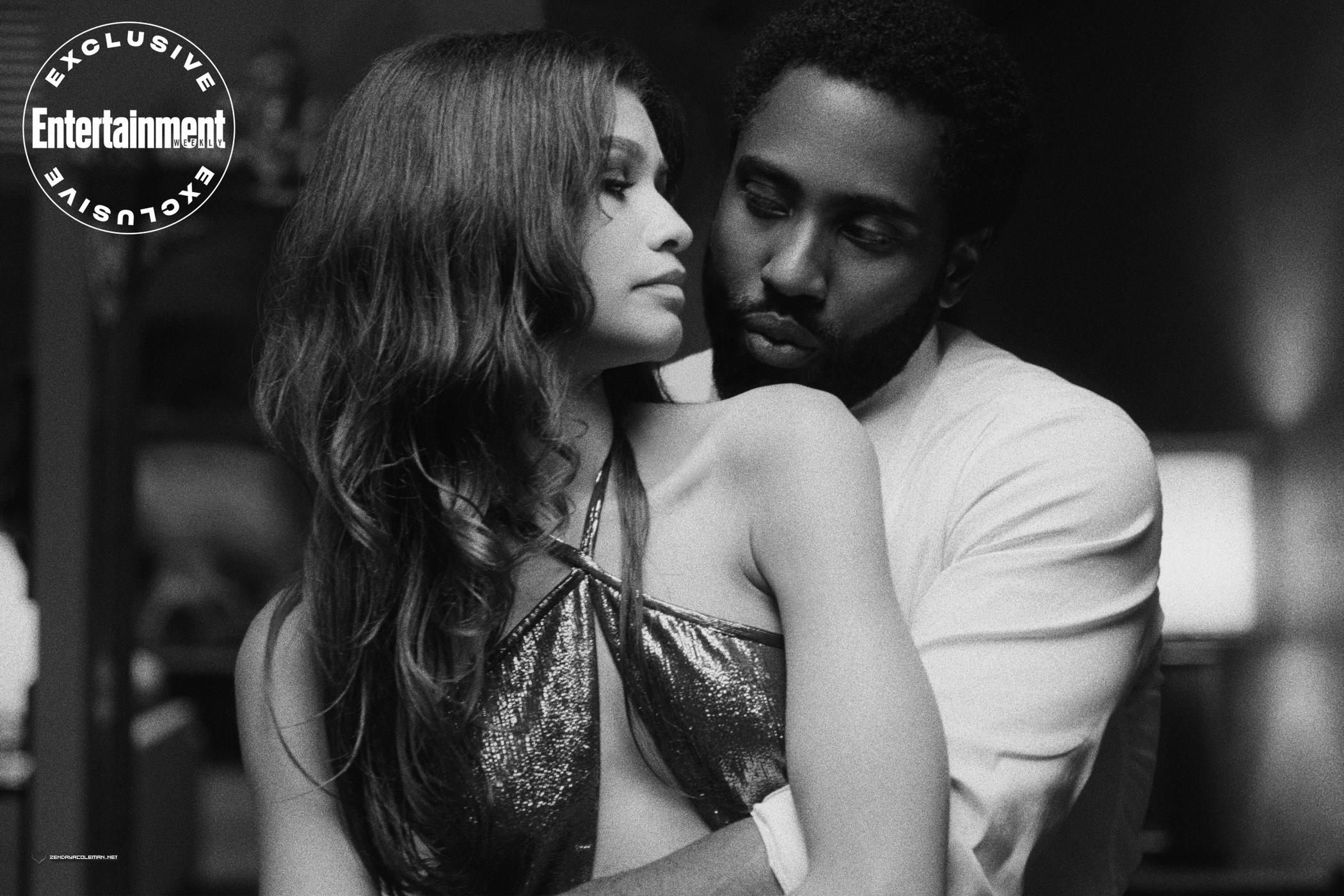
How the two stars quarantined together to make the red-hot romance (out Feb. 5 on Netflix) — while Hollywood was on lockdown.
When Euphoria was forced to postpone production last March due to COVID-19, creator Sam Levinson promptly asked HBO: “Well, can we make a movie?” He’d been deep into daily season 2 discussions with his star, Zendaya, who’d soon net a surprise Emmy win. The creative juices were flowing. They weren’t ready to stop.
The resulting film, Malcolm & Marie, wasn’t backed by Euphoria’s home network, and it came together in secret while the rest of Hollywood shut down. One of the only projects to start and complete production in the early days of the outbreak, the movie began with Levinson and Zendaya bouncing ideas off each other until he had 10 pages of a first draft. The scene: A director forgot to thank his wife at his film’s big premiere, which they’ve just come home from celebrating. (Levinson actually did this, and still feels guilty about it.) The ensuing story was inspired by “films that were contained, yet had dealt with relationships and how we relate to one another inside of an enclosed space,” says Levinson, 36, “which felt apt, given the circumstances of the pandemic.”
Compared with Euphoria’s Rue, Marie “encapsulated more of who I know [Zendaya] to be,” Levinson continues. “This confident, tough woman who was a little bit of a fighter. She’s got opinions; she’s funny, charismatic, radiant.” Zendaya approved. “This was definitely a special departure from anything that I’ve been part of,” the actress, 24, says.
Then came Levinson’s next question: “Who can go toe-to-toe with her?” He thought of the man who would soon be at the center of the movie industry’s most high-profile, high-stakes pandemic-era gamble: John David Washington. “I was a little nervous because I was acutely aware of the fact that he was in the biggest film of the year, and I was about to ask him to be in the smallest film of the year,” Levinson says of the Tenet star.
“I had concerns — and not about the pandemic,” Washington, 36, says of signing on to the project. “I was at such a low. I’m thinking this movie I had, a movie that was supposed to come out at a certain date, a movie I was very proud of — if the movie was ever going to come out! And here’s this opportunity to escape my reality.”
Malcolm & Marie follows the couple over a tumultuous night of arguments, revelations, and passion. Two people, one location — easy enough for a COVID-safe shoot, right? But bare-bones as it may have been, options were limited. “We had to find a place where we could shoot without permits,” says Levinson, who produced the film with Euphoria collaborators Ashley Levinson (his wife) and Kevin Turen. “The only place really in California at that time that you didn’t need a permit to shoot on private property was Carmel. So it had to be in Carmel.”
The rules for the actors were as straightforward as they were strict. “We got tested before we left for Carmel, we got tested when we got there,” says Washington. For 12 days in June, “nobody left the Carmel Valley estate, the lodging. I [thought]: If nobody leaves, we should be pretty good, because we’re basically the only people there.”
Nearly everyone on the skeleton crew needed to wear multiple hats. “I was doing my own hair and makeup, and we didn’t have all the things you would usually have,” Zendaya recalls. “No ADs, or schedules, or script supervisors… There were times when Sam was writing as we were going.”
There was one other complication. “We didn’t really have a third act,” Zendaya deadpans. “[We] were figuring it out as we went. Watching Sam type away, I’ve never experienced anything like that, as far as being so inside the process, literally rewriting scenes with Sam in the middle of shooting.”
Adds Washington, “I’m looking at the way Sam and Zendaya work and they’re like one person. It was very intimidating. I felt myself trying to play catch up the entire time.”
For her part, Zendaya appreciated everything Washington brought as a scene partner. “He’s so talented and detail-oriented and asks all these incredible questions. Both of us in this way, we’re competitive and hardworking, but also very supportive, wanting each other to win and do well. And I think that was so special because you can do a scene and feel like you’re being cheered on, but you’re also being pushed to do better. Because of the level that your creative partner is going.” She then says with a laugh, “He would do his stuff, and I’d be like, ‘Oh s—, well now I better bring it.'”
As Malcolm and Marie tear each other apart, Levinson and the actors mine deep truths about identity, artistry, and love. “There were some triggering things that were happening to me, in the physicality of some of those scenes, that were a bit overwhelming and worked as therapy almost,” Washington says. “I had some breakthroughs, honestly. [I’ll be] appreciative of Sam for that for the rest of my life.” Adds Zendaya: “That process of living inside something all the way through, and being able to be a part of it in every single way, can be equally exciting and terrifying. It’s a big undertaking, to believe in yourself in that way, and it can be scary.”
One of the driving forces for Levinson and Zendaya was being able to employ and empower their Euphoria crew while the rest of Hollywood was on lockdown. Nearly everyone on the film’s set was from the HBO drama and had been out of work. In the spirit of Malcolm & Marie, which is about acknowledging those who help you tell a story, Levinson “wanted to create what we hope is a new paradigm for how films are structured, and how all the people involved in it can have ownership.”
In that sense, at least, the film has already earned a very happy ending: Netflix bought Malcolm & Marie for a reported $30 million in September, just three months after cameras started rolling, setting a Feb. 5 release date. And as Hollywood gets back to work and adjusts to whatever the new normal is, Malcolm & Marie may just wind up leading by example. “I felt like the entire industry was watching us,” Washington admits. Fortunately, they pulled it off.
– Source

I’ve added a bunch of missing magazine scans and photo sessions from 2020 and 2021 that Zendaya has done. I’ve been slowly adding them since November so there’s actually a bunch and you can see the date noted on the page of when I added them. Big thanks to my friend Jen for sending me some of these magazines. I’ll post some links on the bottom so you can read some of the articles on the websites for those who prefer that. Enjoy!


I’ve added new photos for Zendaya’s upcoming projects Malcolm and Marie and Dune to the gallery. The new trailer for Malcolm and Marie was released as well which you can check out below. The film will be available on Netflix next month.




I’ve added missing photos of Zendaya from last month’s special Euphoria bridge episode entitled “Trouble Don’t Last Always” (but also known as “Part 1: Rue” to the gallery. What a great episode. Be sure to tune in to the Part 2: Jules bridge episode next Sunday. Enjoy.

The significance of Zendaya’s pivotal moment in Hollywood and ESSENCE’s ongoing 50th anniversary celebration is one in the same: being an inspiration for Black women.
As much as the Emmy award-winning actress and activist has broken barriers in her past, it’s her present and future in Hollywood that’s winning.Zendaya is one of Black Hollywood’s wildest dreams.
At just 24 years old, the actress has led two successful series on two of the biggest networks in TV land; played the lead in a huge blockbuster Marvel film (a role that up to that point had only ever been portrayed by White women); and become the youngest woman ever to win the Emmy for outstanding lead actress in a drama, achieving that this past September. For a decade we’ve watched Zendaya Coleman navigate her career, from child star to critical darling, with a level of talent, gumption and style that shows she hasn’t just arrived—she’s here to stay.
Yet, all that being said, perhaps the most striking thing about Zendaya is her ability to remain grounded through it all. The Oakland native is brave enough to speak truth to power and humble enough to know when to lend her spotlight to others. She possesses a level of grace and authenticity that gives you hope for the generation she lights the way for.
After an hour on the phone with the Euphoria (which returns for two special episodes in December) star for this interview, it becomes clear she’s a manifestation of the hopes and hard work of many of the legends who have graced this magazine’s cover before her. Zendaya’s awareness—and constant intention to pay homage while carrying our legacy forward—makes her the perfect star to pay tribute to the icons of the past as she becomes a leading force in the present.
First of all, congratulations on your historic Emmy win. What was going through your mind right before they called your name?
ZENDAYA: There’s a video of me that a family friend took while I was waiting, and you can see my leg shaking. In my head I was like, Dude, just chill out. What will be, will be. I remember taking a deep breath, and then hearing my name, and then my family screamed. I was worried that if they kept screaming for too long, I wouldn’t have any time to actually say anything—but I didn’t want to stop them, because they were having a great time. It was a very special night. I’ll definitely remember that one forever.I love that you focused your speech on how there’s hope in young people. Why was that important for you to champion during your big moment?
ZENDAYA: It just feels like a lot of the time, especially for young Black people, you’re birthed into a system that’s not built for you. It’s on us to take it from here and hopefully make it better. But it doesn’t really look like that right now—and the people in charge don’t like to listen to us. But it’s important to lean into hope and lean into the beautiful things that I see my peers doing, whether through their activism or through their art. It’s extremely inspiring for me to watch and be a part of. I wanted to speak to the power of that and let them know, what you’re fighting for does mean something, and you are supported and seen.The significance of your win could easily be seen from the reactions across the internet, especially from young Hollywood. Your peers, like your Euphoria co-star Storm Reid and the Insecure cast, shared videos on social media of themselves screaming over your achievement. What did that support mean to you?
ZENDAYA: I’m honored to have that support, especially from my fellow young Black creatives. Through this Emmy’s period, especially, I felt a strong sense of support within our community, which I’m really grateful for.Would you say that young Black Hollywood is continuing the sort of camaraderie that we’ve seen in the generations before you?
ZENDAYA: I think what’s slowly starting to happen is, artists like Issa Rae and Lena Waithe have created opportunities that have resulted in more of us being in these rooms. That’s such a special feeling, and I think it’s definitely changing the idea that there can only be “one at a time,” which is false. I love to see that genuine love and respect for each other’s work. I hope that we continue to expand that in all kinds of beautiful ways, because I think we’re on a really good path.“A lot of what I do, specifically within fashion, is a tribute to the fashion icons who came before me, many of whom are Black women.”
You all make the future of Hollywood feel bright, which is why I love that your cover will be closing ESSENCE’s 50th-anniversary year. It feels like a passing of the torch. What does this moment mean to you?
ZENDAYA: I’m incredibly grateful—because without the incredible, iconic people who have graced the cover before me, I wouldn’t be here, standing on the shoulders of giants. To be able to do this cover at this time is really special to me. I also felt very excited that ESSENCE allowed Law [Roach] and me to be a part of the creative team and do something a little bit different. I had so much fun on this shoot paying homage to Donyale Luna, the first Black supermodel. A lot of what I do, specifically within fashion, is a tribute to fashion icons who came before me—many of whom are Black women. I love the way it turned out. I’m very proud of it. It’s one of my favorite cover shoots I’ve ever done.When I think of the legacy you’re creating, one of the first things that comes to mind is the all-Black glam team you maintain around you. Your team creates this space for you in the high-fashion conversation that Black women don’t always get to be a part of. How intentional are you when it comes to lifting as you climb—and being cognizant of what you and Law Roach are doing in fashion?
ZENDAYA: That’s always been important to Law and me. Law teaches me so much about fashion history. It’s really important to us to support young Black designers and Black photographers, because the support usually just isn’t there for them. A lot of smaller brands and designers were the ones that supported me before I was being dressed by bigger brands. There’s rarely a look, or anything that we do in fashion, that doesn’t have a story. Everything is done with intention.“It’s important to lean into hope and lean into the beautiful things that I see my peers doing, whether through their activism or through their art.”
Another partner of yours is Euphoria creator Sam Levinson. You two were among the first to find a way to adapt and make a film, Malcolm & Marie, when the pandemic first shut Hollywood down. What was that experience like, and how did it help you cope with the quarantine?
ZENDAYA: It was a dream, because I’ve always wanted to be able to just strip everything away. I love what I do—and like most people, I was finding ways to stay inspired and stay creative, and luckily I know people who are the same way. It was great sitting in a room with John David Washington, Marcell Rév and Sam, literally writing scenes as we went, coming up with ideas as we moved through the characters, and finding new things every day. That was the coolest part. That is why I do this.I was very excited—and maybe slightly jealous— to see John David Washington was playing your romantic lead. You both are in such exciting places in your careers.
ZENDAYA: I was just lucky to share the stage with John David Washington, who is brilliant. He’s extremely talented and such a force. Being able to work across from him definitely pushed me to be better. It was very special.You co-produced Malcolm & Marie [which was acquired by Netflix last month] and have joined forces with Reese Witherspoon to produce A White Lie, which you will also star in. Do you plan to become more involved behind the scenes?
ZENDAYA: I love being able to create what I want to see made. I’m also really interested in cinematography. Maybe I’ll become a director, or a director of photography. I am just really taking in all that knowledge and learning as much as I can. I really love the art of actually making film.I’ve learned you and Levinson are also currently filming something for the Euphoria fans. [At press time, HBO announced Euphoria will return with two special episodes and the first one airs December 6.]
ZENDAYA: Sam and I talk a lot over the phone, and during one of those conversations he was like, “What if we just did a few little in-between episodes that we could put between the seasons, just to give people something?” He wrote these beautiful episodes that actually stemmed from a scene he wrote for the second season that I was obsessed with. Then he basically turned it into one long episode. The storytelling method is so different from the first season. It feels like Euphoria but feels nothing like Euphoria, in a beautiful way. And it talks about things—specifically for Hunter Schafer’s character, Jules—that I think have never been explored before. You get to sit with the characters in a deeper way. I was so excited to be able to get back to it, because I miss playing Rue. Being able to get back into her Chucks definitely was very, very special for me.I’m fascinated by how art manages to thrive during the most adverse times. We’re dealing with COVID, the Black Lives Matter movement and more, but Black storytellers are still out here, creating beautiful and nuanced work.
ZENDAYA: The level of creativity and ingenuity, especially in this time, is inspiring. Everything we’re faced with right now, specifically Black Lives Matter, is traumatic. These are our brothers and sisters we’re watching be murdered. I think to overcome that in any way, and also to allow ourselves that space to have joy, to have beautiful things, to take care of ourselves, to look after each other-—it’s so important.It’s also been encouraging to watch Black people win in the midst of such a difficult year—but Black women, especially, tend to carry more guilt about that juxtaposition than most. Has that been something you’ve dealt with?
ZENDAYA: Absolutely. I understand it entirely. I felt weird celebrating my Emmy win. And it was only a few days later that we heard the Breonna Taylor ruling, which was devastating. We’re also often told not to celebrate our victories. I’ve seen a lot of tweets and stuff urging Black women to be gentle with themselves. I’ve been trying to learn more about that, and how I can help with that—because it really is so important right now.It’s so layered—because while you may be feeling guilty, it’s also true that your Emmy win gave us a sense of joy that I felt the community needed at that moment. It was nice to see everybody have something to celebrate on the timeline.
ZENDAYA: Yes. When I was in quarantine and Megan Thee Stallion dropped the “Savage Remix” with Beyoncé, I’ve never felt more joy from a song coming out.Ha! I was going to ask you what has been bringing you joy. I love that the “Savage Remix’’ is one of those things, because, same!
ZENDAYA: Seeing Black women win, in any form, brings me joy. I was just looking at Rihanna’s Savage X Fenty fashion show, and I was like, “You better, girl! Bad-gal Riri is giving us what we need right now!” Then there are also small things—like a conversation with my grandmother, who I have to call after this because I keep forgetting. Hearing her voice is like food for the soul.Since this is the end-of-year issue, my last question for you is: What’s your New Year’s wish for Black women?
ZENDAYA: For us to continue to fully realize our power and harness it to do great things, because we are incredibly powerful. We’re often convinced that we’re not, and taught to shrink—but we have to believe in our collective power. I always think of that Beyoncé song, “They’ll never take my power, my power, my power.” Let’s take that energy into the new year.
– Source


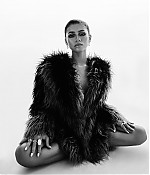


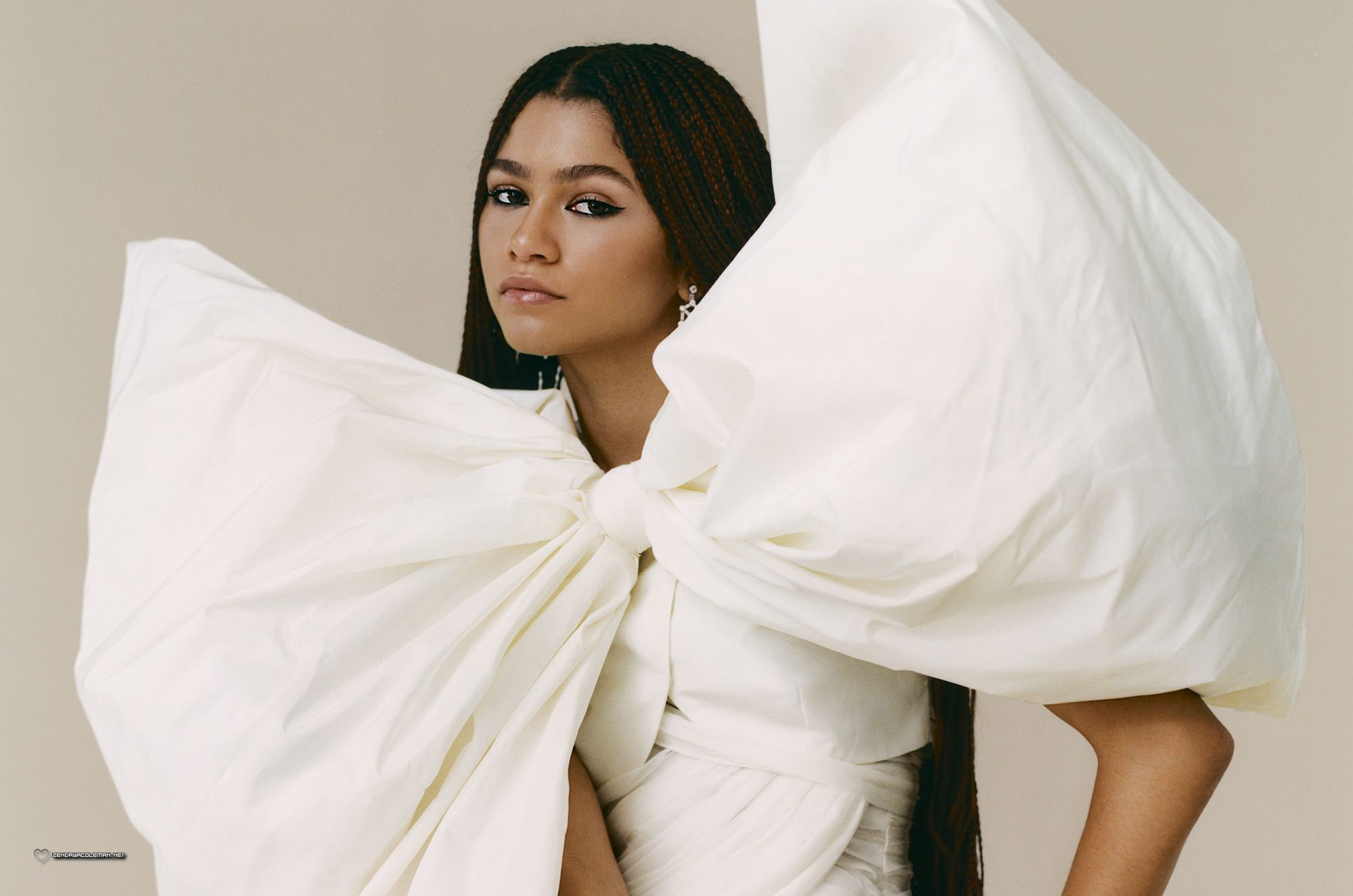
Zendaya Is the Best Thing to Happen to Hollywood
The youngest-ever lead actress in a drama series talks to her ‘Dune’ co-star about making art in a pandemic and the importance of joy.When Zendaya’s name rang out as the winner of the Outstanding Lead Actress in a Drama Series award for her performance in HBO’s Euphoria during the Emmy Awards broadcast this past September, audiences were treated to Zoom-like reaction shots from her fellow nominees before the screen landed on the 24-year-old actress, the youngest recipient of that award in Emmys history. “This is pretty crazy—I don’t really cry,” the Lancôme ambassador said then, brushing aside the bangs of her expertly tousled updo and dabbing a smoky black-lined eye. Behind her sat her family and team, screaming joyfully. Zendaya recalls the moment fondly when her friend Timothée Chalamet calls from France for an exclusive interview with ELLE—although she laughingly admits she worried her family’s long celebration might cue the dreaded awards-show cutoff music.
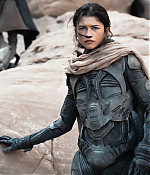
Zendaya and Chalamet became close on the set of Dune, a feature film adaptation of Frank Herbert’s science fiction novel about a feudal intergalactic empire of the distant future. (The movie, which was originally slated to be released this month, was bumped to 2021 due to COVID-19.) In the film, Zendaya’s character, Chani, a warrior from the planet Arrakis, is initially wary of Chalamet’s Paul Atreides, the heir to an aristocratic family who’s been tasked with taking over her home planet, but the two eventually form a tight bond. Even though the book was published in 1965 and the film shot in pre-pandemic 2019, audiences may notice parallels to our current reality—Arrakis’s harsh climate and giant sandworms, perhaps, versus our own smoke-clogged orange skies and “murder hornets.” Zendaya can’t predict what viewers will take away from the film, or even what the world will look like tomorrow, but she remains optimistic. She closed out her Emmy acceptance speech acknowledging that while Euphoria, with its gritty depictions of teen sex, drugs, and trauma, might not always be a shining example, “there is hope in the young people.”
Read more about what makes Zendaya hopeful—and the wild dance parties she hosted in her room for the cast of Dune—in her conversation with Chalamet.
Timothée Chalamet: We haven’t talked since you won your Emmy. Congrats!
Zendaya: Thanks, man. I appreciate it. Pretty nuts. It was a crazy moment.Since the show was virtual, how did it work? Did you know in advance that you were going to win?
No.You didn’t. So how did they get the award there so quickly?
There were these people in hazmat suits that went around to all the nominees’ houses with awards. So basically if you won, you’d grab it quickly from them and have it. If you didn’t win, they’d just take it with them and leave.Oh, shit. [Laughs] So you got to keep yours!
Yeah. Yeah. I got to keep mine. [My assistant] Darnell [Appling] was actually the one who handed it to me.Oh, so that’s it. Well, I’m so happy for you. I was screaming over here when I saw it! When you had just gotten the nomination, I remember us talking about what it was going to be like in this environment, not having an in-person ceremony. But you killed it!
Thanks, man. I was nervous about the possibility of having to get up and speak. So I was like, “Okay, let me just write down a few little bullet points.” Usually I would just go up there and say what’s in my heart, but everybody was like, “No, I think you should definitely write something down.” But then I worried maybe that’s bad luck to have something prepared, because it’s like, I don’t know…You didn’t want to jinx it.
Yeah, exactly. So the day of, I just wrote a little thing down to have just in case. And that was very helpful. I was very nervous, but I’m glad my family was there.It looked like a sweet moment, full of love.
It absolutely was. Everybody was there and screaming, as my family does! We are a very loud family, and I was worried that they were going to be screaming for too long. And the little clock would start ticking, and I’d be like, “Ah, thank you.” And then it would be over.And the guy in the hazmat suit would come in and take it away.
Exactly.What was it like to get all glammed up and then not leave the house?
That was all right with me. I got to feel all fancy and put on this beautiful custom [Armani Privé] gown and do my hair and makeup and then just be with my family in the living room, which was actually quite nice.Very wholesome.
Yeah, it was great. And we got to take pictures in the house, so I knew I would be happy with them.You got photo approval.
Yeah, there was none of the usual “Ah, I hate that picture” that is suddenly circulating everywhere. So it wasn’t bad. It actually worked really smoothly the way they virtually transitioned people over to different media outlets. They really had it all figured out.Maybe we’ll end up having Zoom ceremonies forever.
Yeah. I mean, it’s a new world.In your speech, you said that there’s hope in the young people, and it seemed as if hope was a big part of the message you were trying to get across. What in the past year has given you hope? And what does hope mean to you?
Well, my intention there was really just to be honest, because it feels like a very hopeless time, specifically in this country. I know a lot of my peers feel enraged and exhausted and tired of living and growing up in a system that feels like it wasn’t built for us. At this moment in time, it is hard to find joy and beauty in things, and I really think that is important. Right now, we as Black people need to embrace joy and not let it be taken away from us.How do you embrace joy in your own life?
I experience moments of joy when I’m able to create art and be involved in projects that I connect to deeply, whether it be Euphoria or Malcolm & Marie, the movie I shot during quarantine with [Euphoria creator] Sam Levinson. Another thing that gives me joy is seeing people’s responses to my work. With Euphoria, it’s been incredibly moving to see how people connected to what Sam has written. I’ve heard so many beautiful stories about addiction and recovery, and that brings me hope.What else brings you hope these days?
I find hope in my peers, the people who are out there on the streets doing the work—people I admire and I go to for advice and information on what’s happening, so that I can make sure I’m using my platform in the most strategic way I can to help. There is so much hope in young people, and when I say young people, I do mean myself—people my own age—but I also mean younger. These really young kids are so smart and have such a clear understanding and plan for how they want this world to change. Even my little nieces! They are so aware, and I mean, I can take credit for some of that, because I’ve been schooling them. But they also have their own point of view. We have discussions about [the world]. They know what’s up, and they want to be part of that change.Over the course of your career, you’ve given a lot of people hope and joy. I saw some montages on Instagram of all the work you have done over the last decade, and it was really moving. Rue, the character you play on Euphoria, has connected with so many people. And we’ve talked a lot about engagement, putting that voice forward. Speaking of which, you spoke to Michelle Obama yesterday, didn’t you?
Yeah.And you’ve been all over trying to get people registered to vote.
Yeah, yeah. Shit, I mean, all you can do is encourage people and help share information.Absolutely. So in Dune, our characters are up against horrible odds in a cruel sci-fi world set in the distant future. What was shooting this film like for you?
Oh, man. I had a great fricking time. I felt like such a badass, just wearing that suit and walking around on these beautiful rock formations. It felt cool and so exciting to be part of the magic.What was your favorite thing we did on break from shooting?
I guess it was the dance parties that I hosted in my room.There was a super legit fucking wrap party at the end there. We were with some of the cast, and then Javier [Bardem] came in and we were all dancing.
Javier popped in, yeah.You have Polaroids of that moment, right? That was a full-on dance party. Okay, so we’re going to do a hard right, serious transition here. Tell me about shooting Malcolm & Marie in quarantine with Sam Levinson. To my understanding, before anybody was really shooting anything in quarantine, you guys did it very safely. You obviously have an amazing creative relationship with him.
Sam is like family to me. I talk to him almost every day and night, every other day. Sometimes we talk about Euphoria, and sometimes we just talk about life or current events or whatever. So we got this idea that we could do a movie in quarantine safely with a very small number of people. We used some crew members from Euphoria who obviously didn’t have a job because filming had stopped. I was fascinated with this idea of shooting a film with just two characters [John David Washington and Zendaya play the titular roles]. It was like a play. It was challenging for all of us, because it was shot in just one space. Being quarantined together was great in some ways, because it allowed us to workshop and really dig into the material while we were there.Yeah, I know when I was talking to you in that period, I could hear how full of creative inspiration you were in that controlled environment. I can imagine, from an acting perspective, that it was really fulfilling. There are a lot of big movies out there, but these kinds of very intimate acting opportunities can be harder to come by.
It was an actor’s dream. But it was also a little nerve-racking. When you have an idea, and you’re putting your own money into it—I mean, I was literally using my own clothes on set and doing my own hair and makeup—it’s hard not to get a little bit insecure. Like, “Oh my gosh, am I really doing this?” It was one of the first times I just went for something, and I’m so grateful and proud of it. Working with Sam, obviously, and Marcell [Rév, Euphoria’s cinematographer] was really special, but then John David Washington is just so brilliant and such a wonderful person. I can’t wait for you guys to meet. I don’t know if you have already.I’ve crossed paths with him a couple of times. Man, that guy is so talented. I’m so inspired by what he’s done in BlacKkKlansmanand Tenet. His acting, but also just his physicality in Tenet, the way he moves across the space. And now, even the bits you showed me with Malcolm & Marie. He’s really one of the great actors of our time. So exciting that you guys were able to do that. And your relationship with Sam—man, it’s something special.
Yeah, he’s cool. Like I said, I’m lucky I’ve been able to work with cool people such as yourself. I’m grateful that you’ve all ended up being really wonderful people who became my friends.The shooting for season two of Euphoria may not start until early 2021, but I know you guys shot a bridge episode in that safe environment. But that second season is happening, right? And can you say anything about the second season, or where Rue is heading, without giving too much away?
I can’t really say too much about the in-between episodes, but I’m excited for people to see them. We’re doing a little Christmas special to check in with everybody on Euphoria, until we can get back to [the full production], which probably won’t happen until after I get back from filming the next Spider-Man movie, which is pretty soon.Well, it sounds like you’re staying busy, but what are you most looking forward to when things get back to normal? What’s the one thing you haven’t been able to do in the past six months that’s number one on your to-do list once it’s deemed safe?
I don’t know—I think that things are going to stay different for quite a long time. We’re probably going to have a new normal to keep people safe and healthy, which I’m totally down for. I mean, I love traveling. I don’t feel super-safe traveling all over the place quite yet, but I can’t wait to get back to it. I love being able to visit different places. I think that’s one of the beautiful parts of our job. Anytime I go on either a press tour or travel for work, which is really the main reason why I travel, I try to find as many museums and educational tours as I can. Some people think it’s boring, but I absolutely love it. You get all this information, and you go home and you start telling people random things like, “Did you know that this was built and….” I just love having random facts. So, yeah, I miss traveling for sure. Luckily I’ve been able to work, so I’m grateful for that, being able to work safely. I do miss being able to actually go to the movies. But you know what? All of that can wait.
– Source
This issue is December 2020 and is featured in both Elle and Elle UK. Thanks to my friend Jen for the UK scans. Enjoy all the pretties!